
Licensed Local Guides
Every guide on our roster holds a Campania regional licence and was raised within a half-hour drive of the Porta Marina gate. The history is on their doorstep.
Step past the city gates and into 79 AD. Our licensed local guides lead small, unhurried tours through the streets, frescoes and forgotten kitchens of the Pompeii archaeological site — the way the city itself would tell its story.
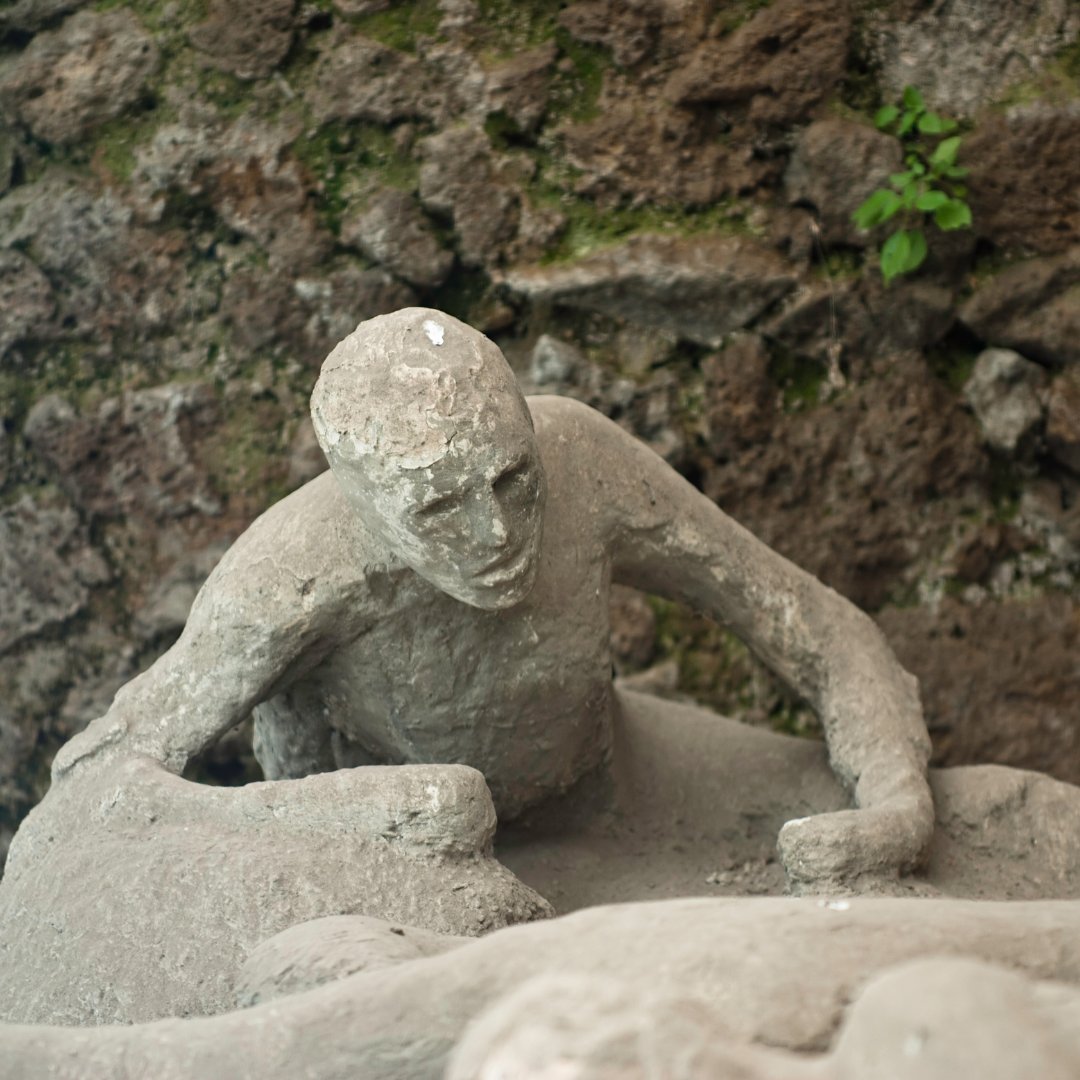
On the morning of 24 October, 79 AD, a column of ash rose seventeen miles above Mount Vesuvius and fell back across the Bay of Naples. Pompeii was buried in less than two days, and the city stayed where it lay for almost seventeen centuries. What remains is not a museum behind glass — it is a Roman city you can still walk through.
Our guided tours of Pompeii are built around that simple idea. No rush, no scripts, no fifty-person headsets. Just an archaeology-trained guide who lives here, a small group, and the time to actually see a city most visitors only photograph.
You can buy a ticket to Pompeii in five minutes. Getting inside the story takes someone who knows the place. Here’s what that looks like with us.
Every guide on our roster holds a Campania regional licence and was raised within a half-hour drive of the Porta Marina gate. The history is on their doorstep.
We keep groups intentionally small. You will hear your guide without a radio in your ear, and you can ask the question you actually want to ask.
We’ve been running tours of the Pompeii excavations for years. We know which streets are open today, which rooms are worth waiting for, and when to skip the crowd.
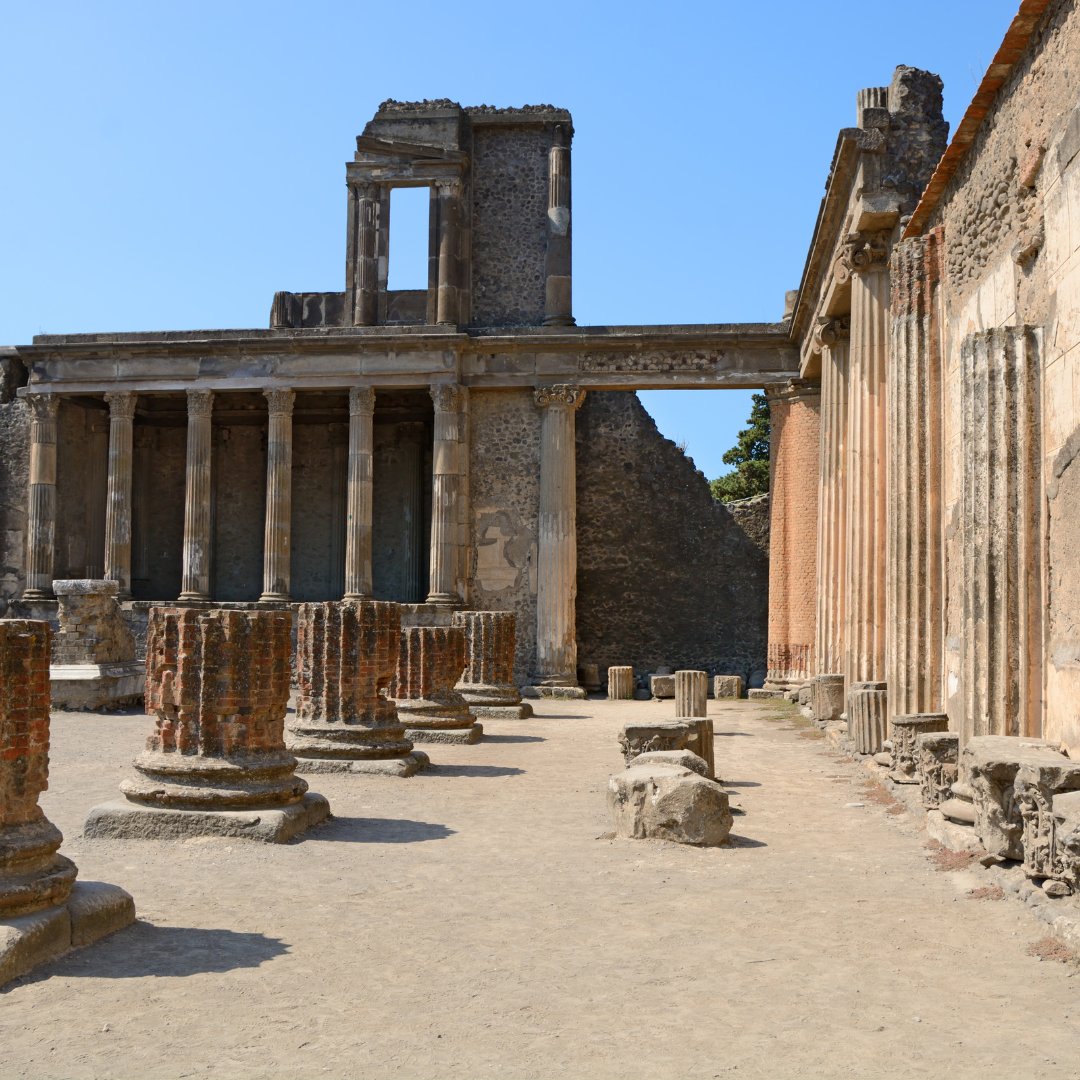 The Basilica
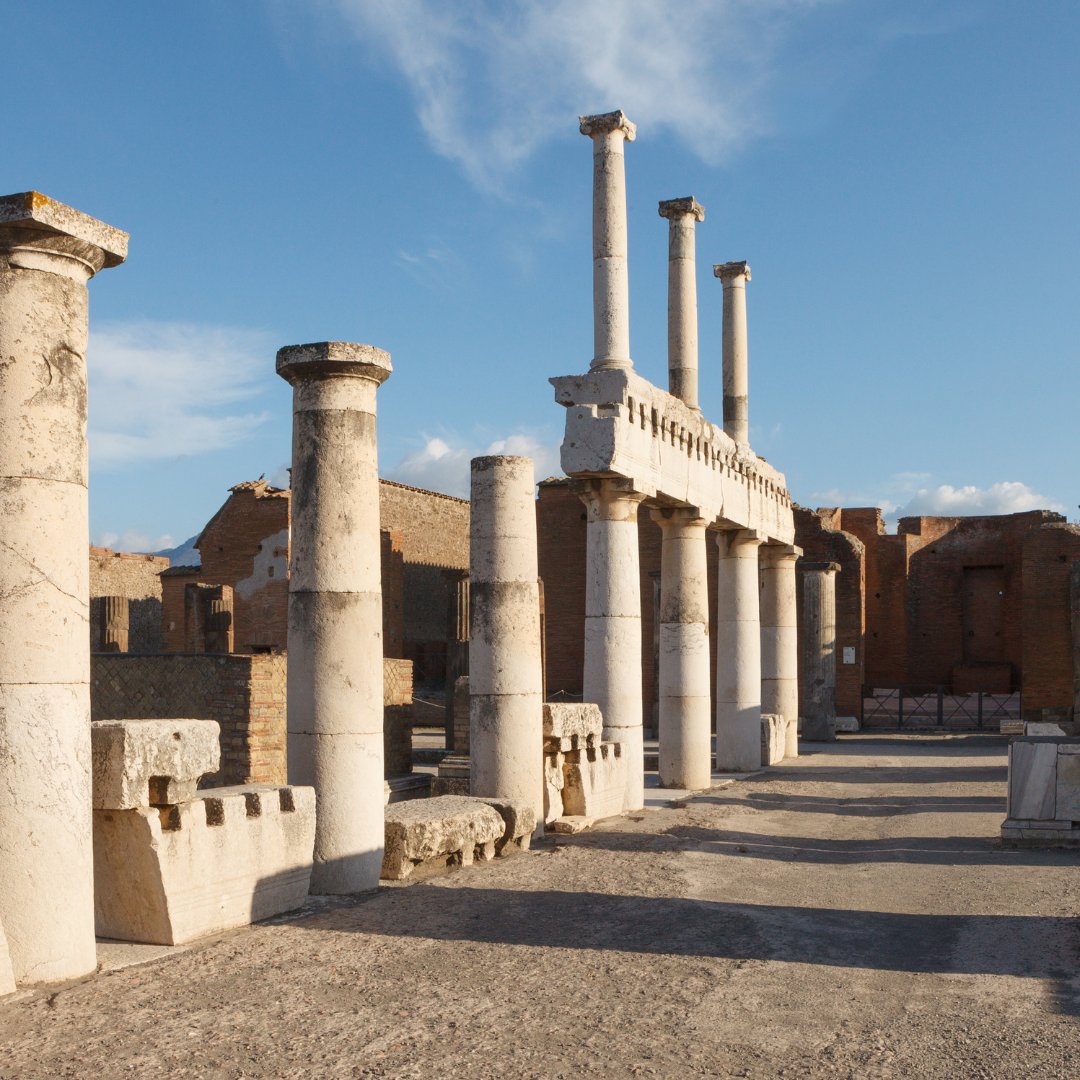
Your walk through Pompeii starts where Roman public life began — the Forum, with its open square, temples to Jupiter and Apollo, and the long colonnade where citizens once argued, traded and gossiped beneath the shadow of Vesuvius.
From there we move into the residential blocks. We’ll step inside houses with their original mosaics still on the floor, look at a working bakery with the oven and millstones intact, and follow the deep ruts that chariot wheels carved into the basalt road over two hundred years.
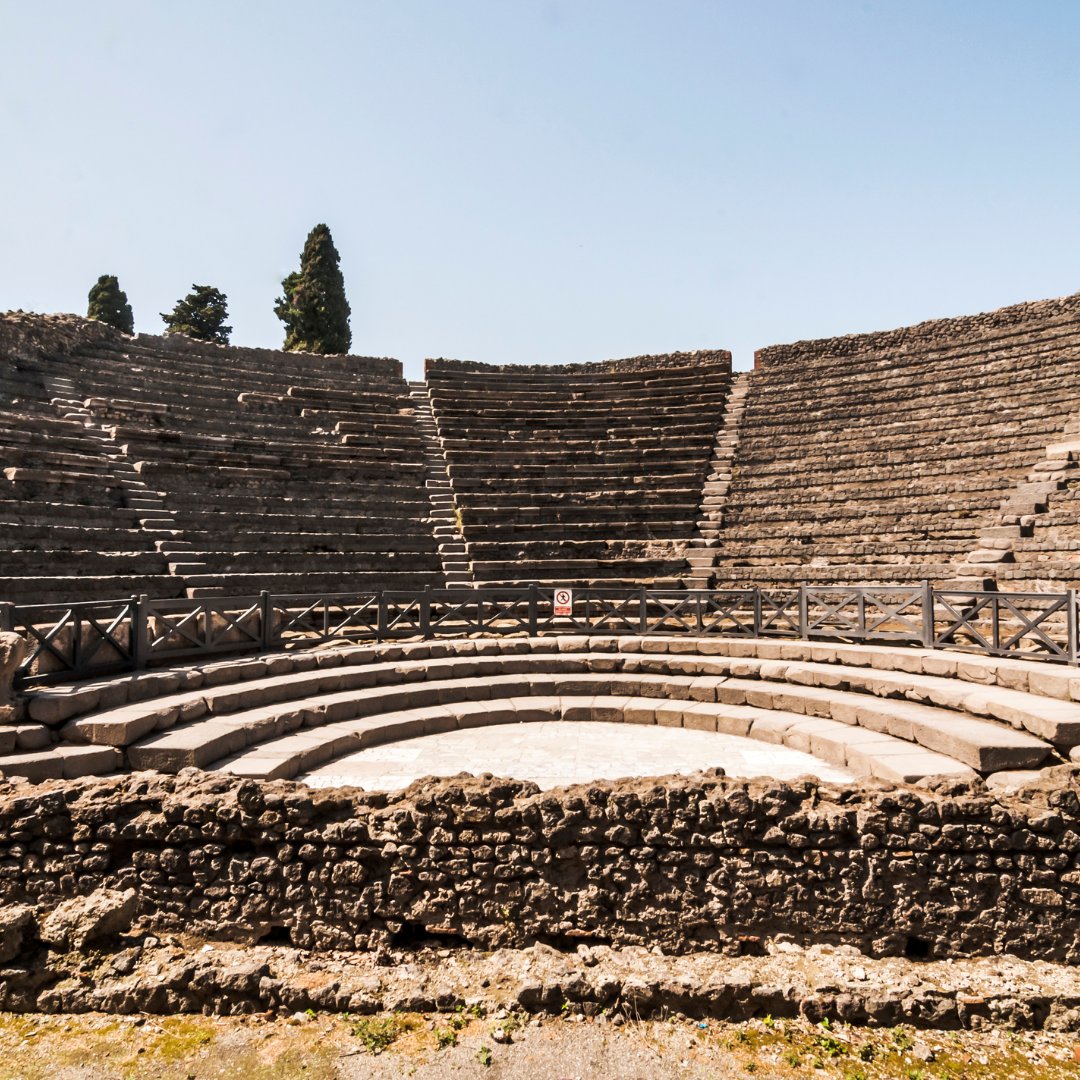 The Odeon
Tucked behind the temples sit two theatres — one large and open-air, one small and once roofed in cedar wood. The big one held five thousand people for plays and gladiator displays before the amphitheatre was built. The smaller one, the Odeon, hosted poetry and music.
Stand in the centre of the orchestra and your guide’s voice carries to the top row without raising it. The acoustics were designed in the 1st century BC and still do their job two thousand years later.
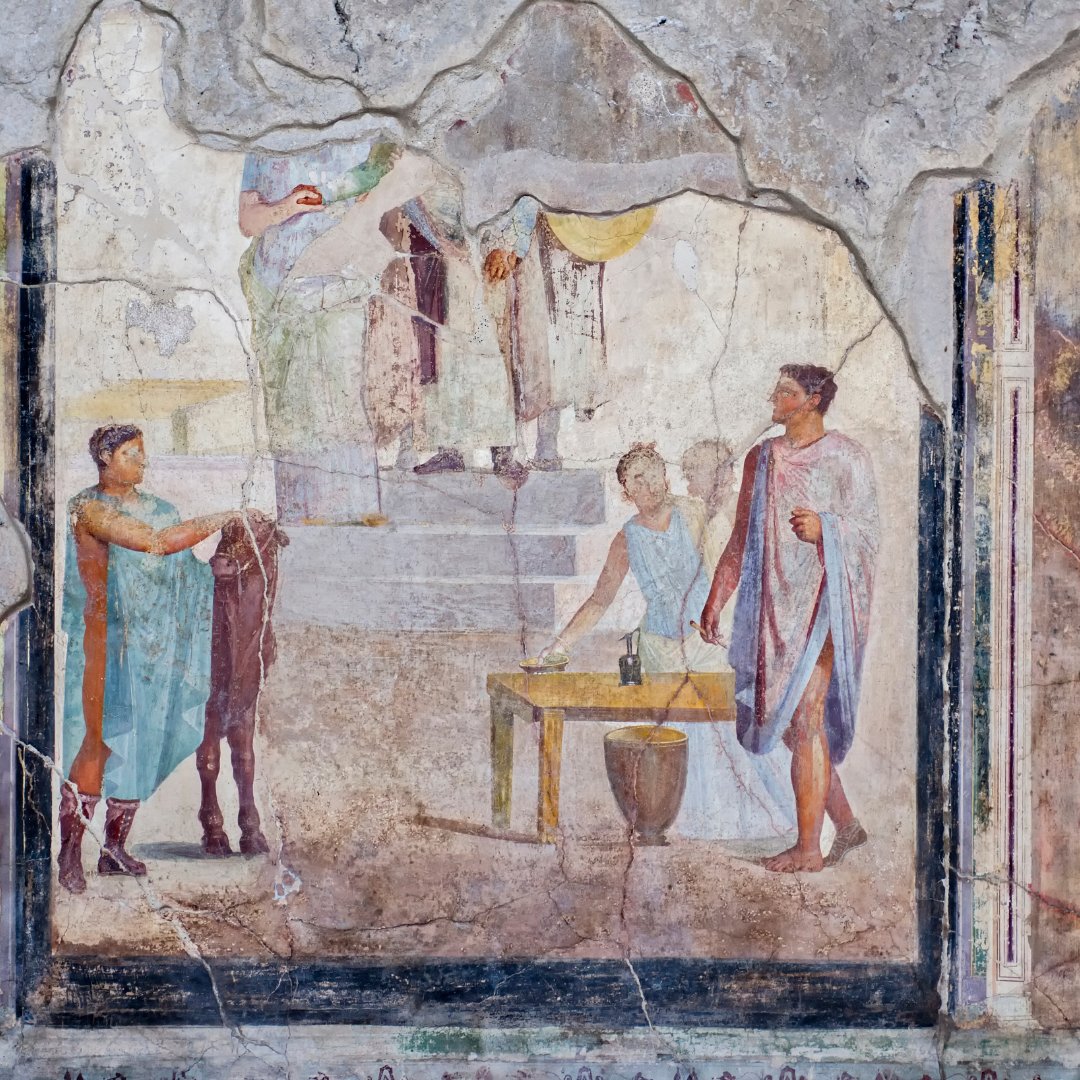 Wall Frescoes
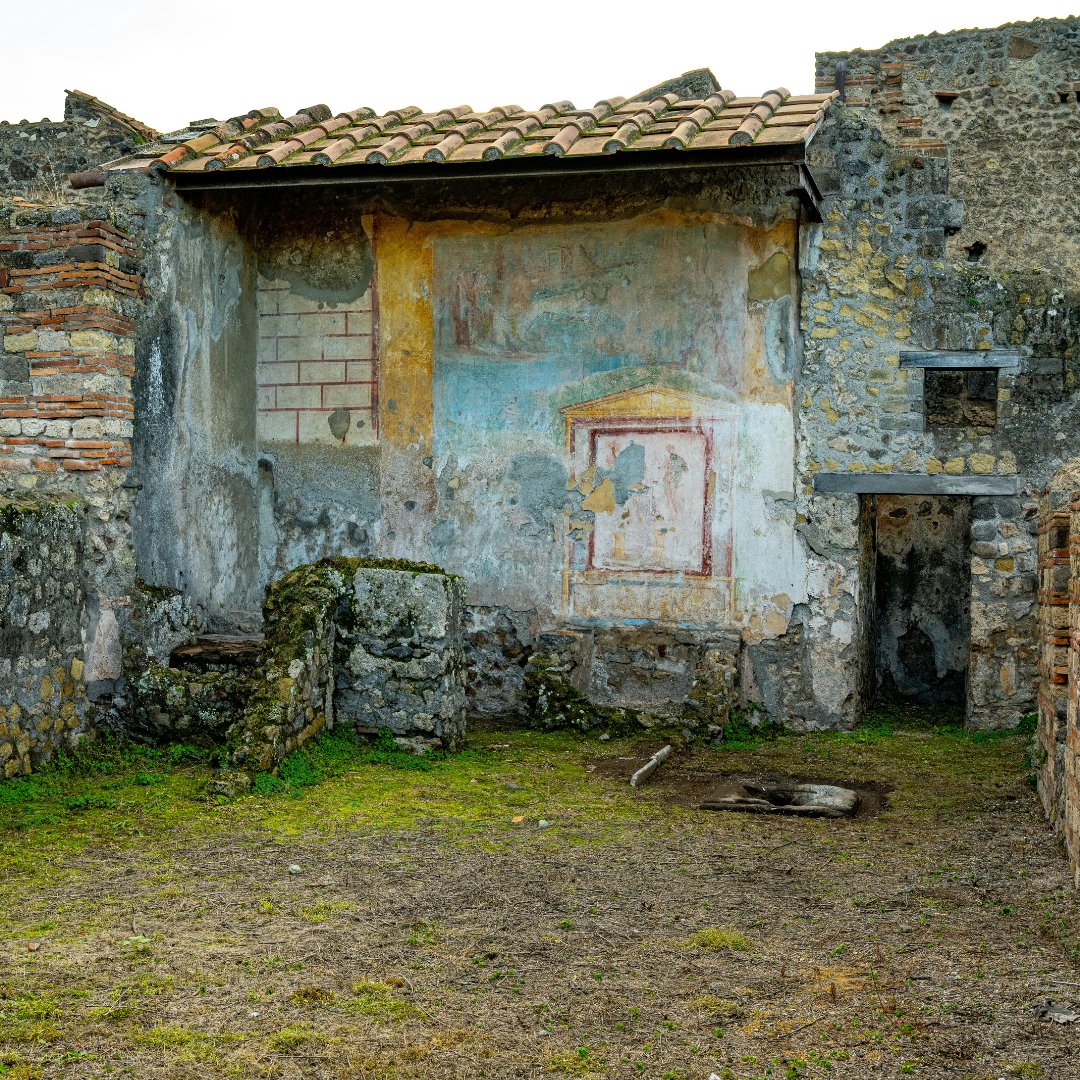
The walls of Pompeii were painted — almost all of them. Reds, blues, ochres and a black so deep the Romans had to invent a special technique to keep it from cracking. When the city was rediscovered in the 18th century, those colours were still there.
Your guide will walk you through the four classical styles of Roman wall painting and point out the small, human details — an election poster, a tavern bill, a child’s drawing of a gladiator — that don’t make it onto any guidebook page.
You could hear the shrieks of women, the wailing of infants, and the shouting of men — and many lifted their hands to the gods, but a greater number imagined there were no gods left.
Eyewitness, 79 AD
These photographs are taken inside the Pompeii archaeological site. Click any image to enlarge it — the locations are stops your tour will likely cover.
The Pompeii archaeological park is large — 44 hectares, 1,500 buildings, and miles of original Roman road. Comfortable shoes matter. The rest, we’ll handle for you on the day.
Call us directly and a real person will answer — we’ll talk through the date, the group, and the right tour for you. Or browse and book online on our main site.
Office landline: +39 081 593 42 20 · Email: info@toursshared.com
Almost everything we know about daily life in the Roman Empire — what people ate, how they advertised, what they argued about in graffiti, what colours they painted their children’s rooms — comes from this single city. Pompeii is the most complete portrait of an ordinary Roman town that has ever survived.
It’s a UNESCO World Heritage site, the second-most-visited place in Italy, and still being excavated today. New rooms, new frescoes and new mosaics are uncovered nearly every year. The Pompeii you visit in 2026 is not the Pompeii anyone visited in 2015 — and that’s part of why a guide is worth it.